High disk I/O is one of the most common and most misunderstood causes of slow Linux servers.
This guide is written the way real incidents are handled — from symptom to root cause, with clear interpretation at every step.

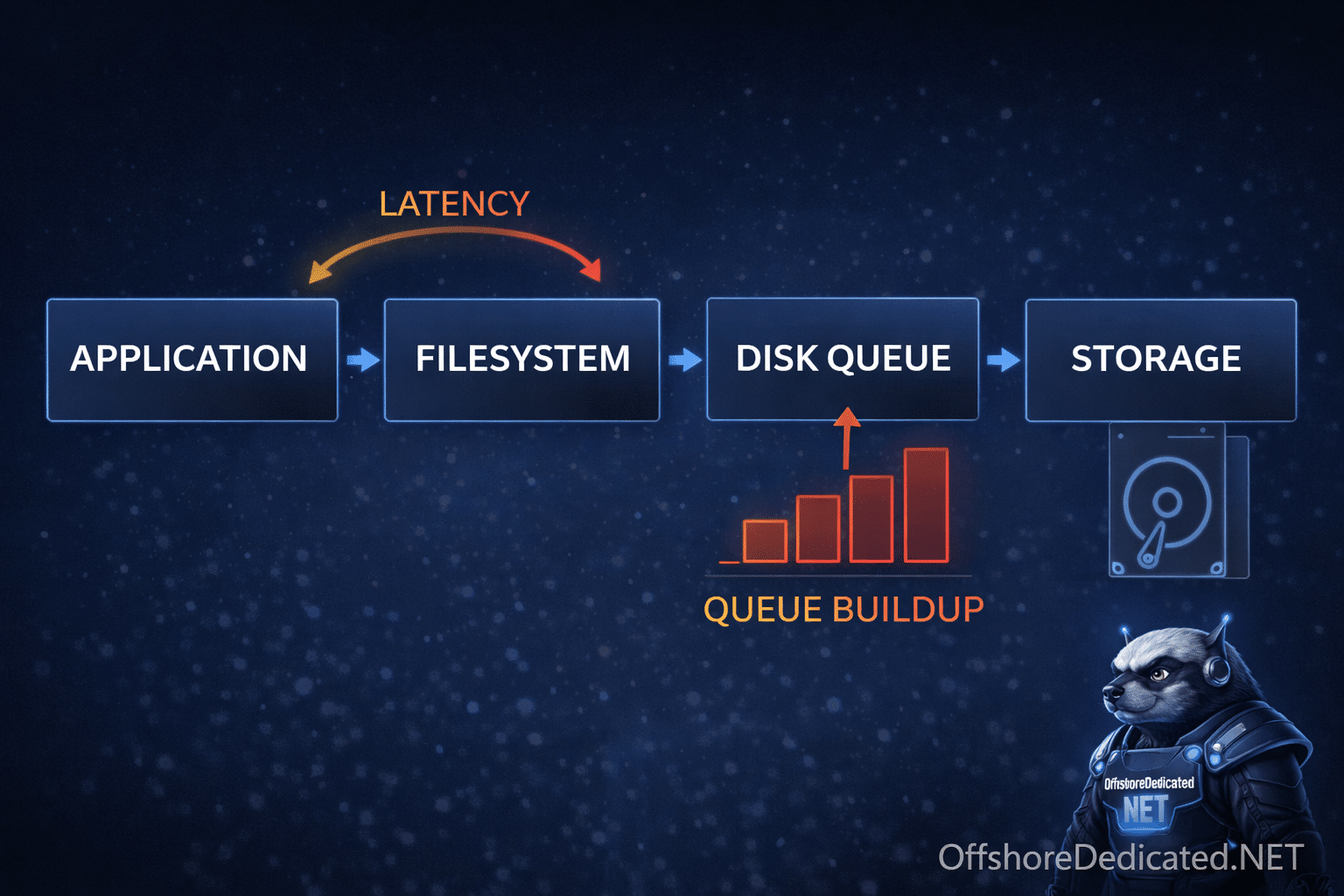
What “High Disk I/O” Actually Means
It does NOT just mean “disk is busy”.
It can mean:
- Too many reads/writes
- Slow storage latency
- Queue buildup (requests waiting)
- Blocking processes (D-state)
👉 Your goal is to identify which one.
Step 0: Confirm the Symptom (from workflow)
Usually you arrive here after:
- High load
- Low CPU usage
- Slow responses
Step 1: iostat (Primary Tool)
Install if needed:
# Linux (RHEL/CentOS)
yum install sysstat -y
# Linux (Debian/Ubuntu)
apt install sysstat -y
Run:
iostat -x 1Key Columns (MUST understand)
| Field | Meaning |
|---|---|
| %util | Disk usage percentage |
| await | Average wait time (ms) |
| r/s, w/s | Reads/Writes per second |
| avgqu-sz | Queue size |
How to Interpret iostat (THIS is where expertise is)
Case A: %util ~100%
Disk is saturated
Case B: High await (>50ms HDD, >10ms SSD)
Latency problem
Case C: High avgqu-sz
Requests are piling up (queue bottleneck)
Step 2: iotop (Who is Causing I/O)
iotopNote: Requires root privileges on Linux. On macOS, iotop is not native.
Look for:
- High read/write processes
Step 3: vmstat (System View)
vmstat 1Look at:
wa→ I/O wait
Interpretation
- High
wa→ CPU waiting on disk
Step 4: Check D-State Processes
ps -eo pid,stat,cmd | grep DConfirms blocking I/O
Step 5: Identify Files Causing I/O
lsof -p PIDLook for:
- Logs
- Databases
- Temporary files
Real Production Case (Step-by-Step)
Situation
- Website slow
- Load = 15
- CPU idle high
Investigation
iostat→ %util = 100%vmstat→ wa highiotop→ MySQL heavy writes
Root Cause
Database writing too frequently to disk
Fix Options
- Optimize queries
- Add caching
- Move to faster storage (SSD/NVMe)
Common Causes of High Disk I/O
- Database overload
- Log files growing rapidly
- Backup processes
- Malware / abuse scripts
- Slow or failing disks
Time-Based Thinking
Sudden spike
- Traffic surge
- Backup job started
Gradual increase
- Database growth
- Log accumulation
Common Mistakes
❌ Looking only at %util
Latency (await) is equally important
❌ Killing processes blindly
Fix cause, not symptom
When This Matters in Production
Disk I/O issues affect:
- Databases
- File servers
- Streaming workloads
Infrastructure options:
Related Linux Guides
- How to Investigate a Slow Linux Server
- Linux Process States Explained
- How to Monitor Processes with htop
Final Takeaway
High disk I/O is not just a metric.
It is a signal of system pressure.
An expert does not just see 100% usage —
👉 They understand why the disk is struggling.