A Video On Demand (VOD) platform is a system that lets viewers press play on a video at any time — without waiting for a live broadcast schedule.
But operationally, “VOD” is not just a website with video files.
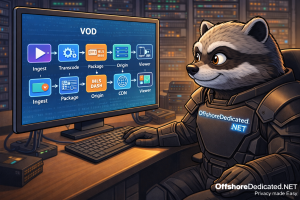
A production-grade VOD platform is a pipeline:
Ingest → Encode/Transcode → Package → Store → Deliver via CDN → Secure → Monitor → Scale
This guide explains VOD from beginner to sysadmin depth — and ties it to the infrastructure decisions that make VOD stable at scale.
If you’re new to hosting layers, start here:
- What is Web Hosting? Detailed Overview
1) VOD vs Live Streaming (Simple, Clear Difference)
VOD: pre-recorded video. Viewers can pause, rewind, and start anytime.
Live streaming: real-time broadcast. Viewers join the stream “as it happens.”
Infrastructure differences:
- VOD is storage-heavy and cache-friendly
- Live is latency-sensitive and requires real-time ingest reliability
VOD can still be delivered with low latency for fast start, but it is not the same operational problem as live.
2) The Core Components of a VOD Platform
A) Ingest (Uploading Content)
Your platform needs a controlled way to accept video files:
- admin upload panel
- API upload
- S3-compatible storage uploads
Operational concerns:
- large file uploads (resume support)
- upload authentication
- virus/malware scanning
- checksum validation
B) Transcoding (Turning One Video Into Many)
Viewers have different bandwidth and devices, so VOD platforms typically transcode into multiple renditions:
- 1080p / 720p / 480p / 360p
- multiple bitrates per resolution
This enables Adaptive Bitrate Streaming (ABR).
Infrastructure impact: transcoding is CPU/GPU intensive and often runs on separate worker nodes.
C) Packaging (HLS / DASH)
After encoding, the video is packaged into small pieces:
- playlists/manifest files
- segmented media files
Most modern VOD uses HTTP-based ABR:
- HLS (widely used across devices)
- MPEG-DASH (widely used across many environments)
At scale, packaging strategy affects:
- storage layout
- cache efficiency
- player compatibility
D) Origin Storage (Where the Real Files Live)
This can be:
- object storage (S3-compatible)
- dedicated storage servers
- distributed file systems
VOD typically needs:
- high read throughput
- predictable latency
- lifecycle policies (archive old files)
E) CDN Delivery (Where Speed Comes From)
A CDN caches your segments close to viewers.
In practice:
- origin is the source of truth
- CDN is the performance layer
CDN reduces:
- bandwidth load on origin
- viewer buffering
- global latency
F) Player Layer (Client Playback)
Your player requests playlists/manifests and downloads segments.
A stable VOD platform is not just “good servers.”
It’s also:
- correct manifest format
- consistent segment durations
- predictable keyframe alignment
3) VOD Delivery Formats: HLS, DASH, and CMAF (Practical View)
HLS and DASH in One Sentence
Both formats split video into small segments and let the player switch quality up/down based on bandwidth.
CMAF (Why You Hear This Name a Lot)
CMAF is a packaging approach that helps unify workflows and can reduce latency while improving delivery efficiency.
Practical value:
- one encoding ladder, multiple delivery targets
- better reuse of segments
- foundations for low-latency variants
Important: VOD does not require ultra-low latency — but CMAF-style packaging can improve startup time and operational simplicity.
4) The Real Infrastructure Bottlenecks in VOD
Most VOD failures are not “the website is down.” They are:
A) Bandwidth saturation
If segments are served from origin instead of CDN, origin bandwidth gets crushed.
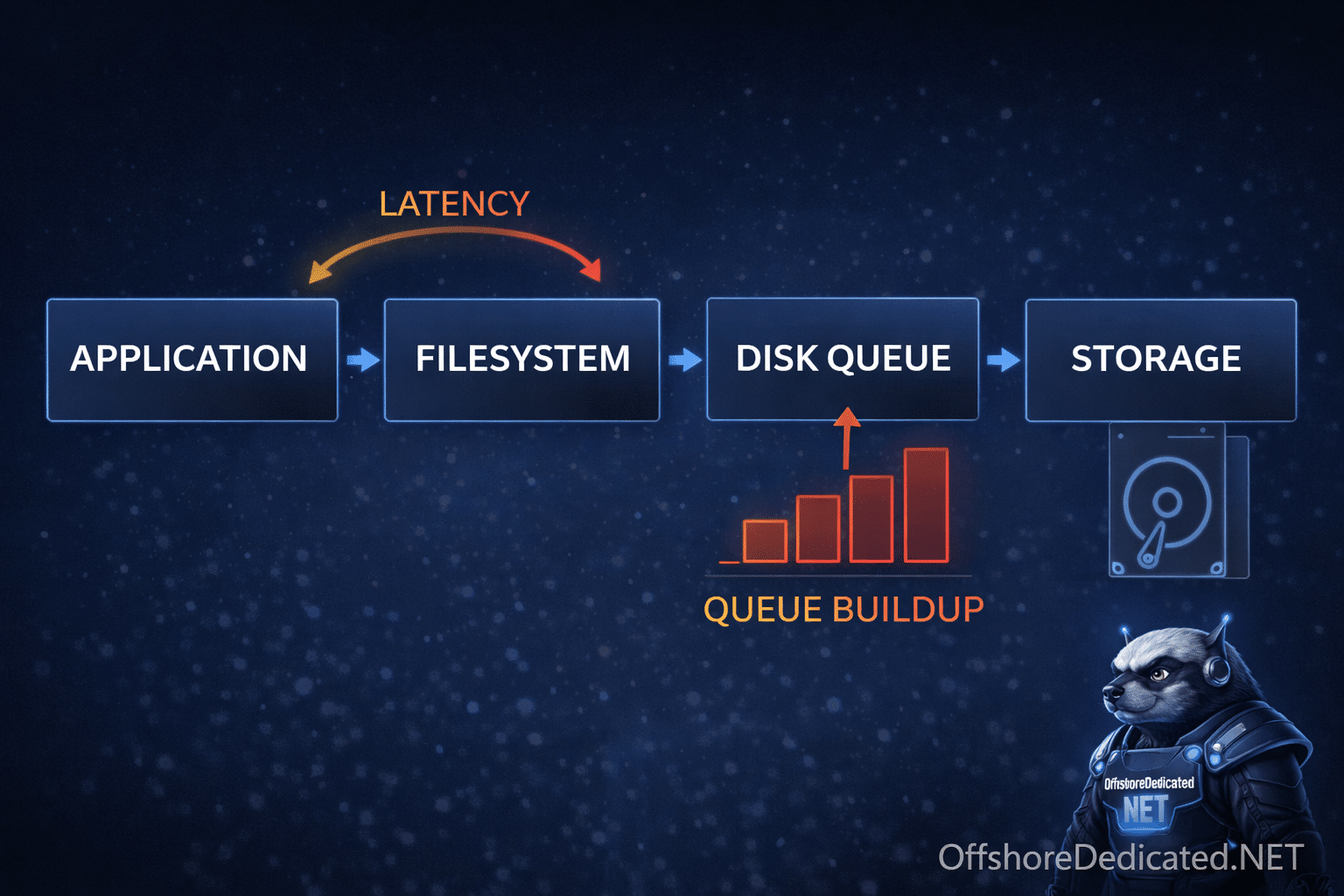
B) Disk I/O limits
Segments are small, requests are many.
Random read patterns can destroy performance on weak storage.
C) Transcoding queue backlog
If your encoding workers can’t keep up:
- uploads pile up
- publishing delays grow
- platform feels “broken” even though web is up
D) Database pressure
VOD platforms store metadata:
- titles
- renditions
- DRM keys references
- user activity
If database performance collapses, publishing and playback logic degrades.
For database-level operational troubleshooting, see:
5) Security and Content Protection (Clean, Practical)
VOD platforms must protect both:
- platform integrity (security)
- content access rules (authorization)
Core Controls
- Signed URLs / signed cookies
- Token-based access control
- Hotlink protection
- Rate limiting for segment fetching
DRM (When It Matters)
DRM is typically used when content rights require it.
Operationally, DRM introduces:
- encryption keys
- license requests
- additional failure modes (license server availability)
Even without DRM, access-control and anti-abuse controls matter.
If you run a privacy-focused operation, consider how infrastructure geography impacts enforcement and policy decisions:
6) VOD Platform Architecture Patterns (From Simple to Serious)
Level 1: Single-Server VOD (Starter)
- one server hosts site + media
Works for small libraries, low traffic.
Breaks under bandwidth spikes.
Level 2: Origin + CDN (Standard)
- origin stores segments
- CDN caches and delivers globally
This is the typical baseline for a real VOD platform.
Level 3: Multi-Node VOD (Production)
- separate web/app servers
- separate database
- separate transcoding workers
- origin storage optimized for high read throughput
- CDN delivery
This is where Streaming Dedicated infrastructure becomes useful.
For workload isolation and predictable throughput, see:
If you want root control and predictable resources without full hardware, start here:
7) Performance Engineering for VOD (What Pros Actually Tune)
A) Segment duration strategy
Short segments:
- faster quality switching
- more requests
Longer segments:
- fewer requests
- larger buffering units
There is no universal best. It depends on your audience and device mix.
B) Cache-control headers
Your CDN behavior depends on correct caching headers.
Bad cache control = origin overload.
C) Storage layout
You want predictable file paths, low metadata overhead, and scalable directory structure.
D) TLS + HTTP versions
Modern clients and CDNs benefit from optimized HTTP delivery. The main point:
- keep delivery consistent and cache-friendly
8) Abuse, Scraping, and Bandwidth Theft (Reality)
VOD platforms attract:
- scrapers
- hotlinkers
- bot traffic
Controls you should plan:
- signed URLs
- rate limiting
- WAF rules
- geo rules (if policy requires)
Operationally, “DMCA-tolerant” does not mean “no rules.”
It means infrastructure and policy decisions are evaluated under the hosting jurisdiction you operate in.
9) A Practical Checklist: Is Your VOD Stack Ready?
- CDN configured and caching correctly
- Origin storage handles burst reads
- Encoding workers sized to ingest rate
- ABR renditions planned (not random)
- Playback tested across devices
- Access-control in place (tokens/signed URLs)
- Monitoring for bandwidth, errors, origin hit ratio
- Backup plan for critical metadata
Final Thoughts
A VOD platform is not “a server with video files.”
It is a complete delivery system where storage design, packaging format, caching strategy, and security controls determine whether users see smooth playback — or endless buffering.
If you are building a VOD product (or hosting one), start with a clean architecture:
- define origin vs CDN responsibilities
- separate encoding workers from delivery
- choose infrastructure based on throughput and isolation needs
For high-throughput VOD delivery and predictable performance, dedicated streaming infrastructure is often the stable long-term choice.