Dedicated servers are often marketed as “maximum performance” hosting solutions. While that statement is directionally correct, it is incomplete. A dedicated server is not simply a faster VPS — it is a fundamentally different infrastructure model with distinct architectural, operational, and financial implications.

This guide examines dedicated servers through a systems-engineering lens: hardware allocation, performance behavior, isolation boundaries, scaling models, and long-term operational tradeoffs.
Recommended reading for context:
1. What a Dedicated Server Actually Is (Beyond Marketing)
A dedicated server is a single physical machine allocated exclusively to one client or organization.
Key architectural characteristics:
- No hypervisor layer sharing CPU cores with other tenants
- No shared RAM pool
- No shared disk I/O queues
- Full root-level operating system control
- Direct hardware access (RAID, BIOS-level tuning, network interface configuration)
Unlike VPS infrastructure, which relies on virtualization (KVM, Xen, VMware, etc.), dedicated servers operate directly on bare metal.
This eliminates hypervisor overhead and cross-tenant resource contention.
2. Core Advantages of Dedicated Servers
A) Predictable CPU Performance
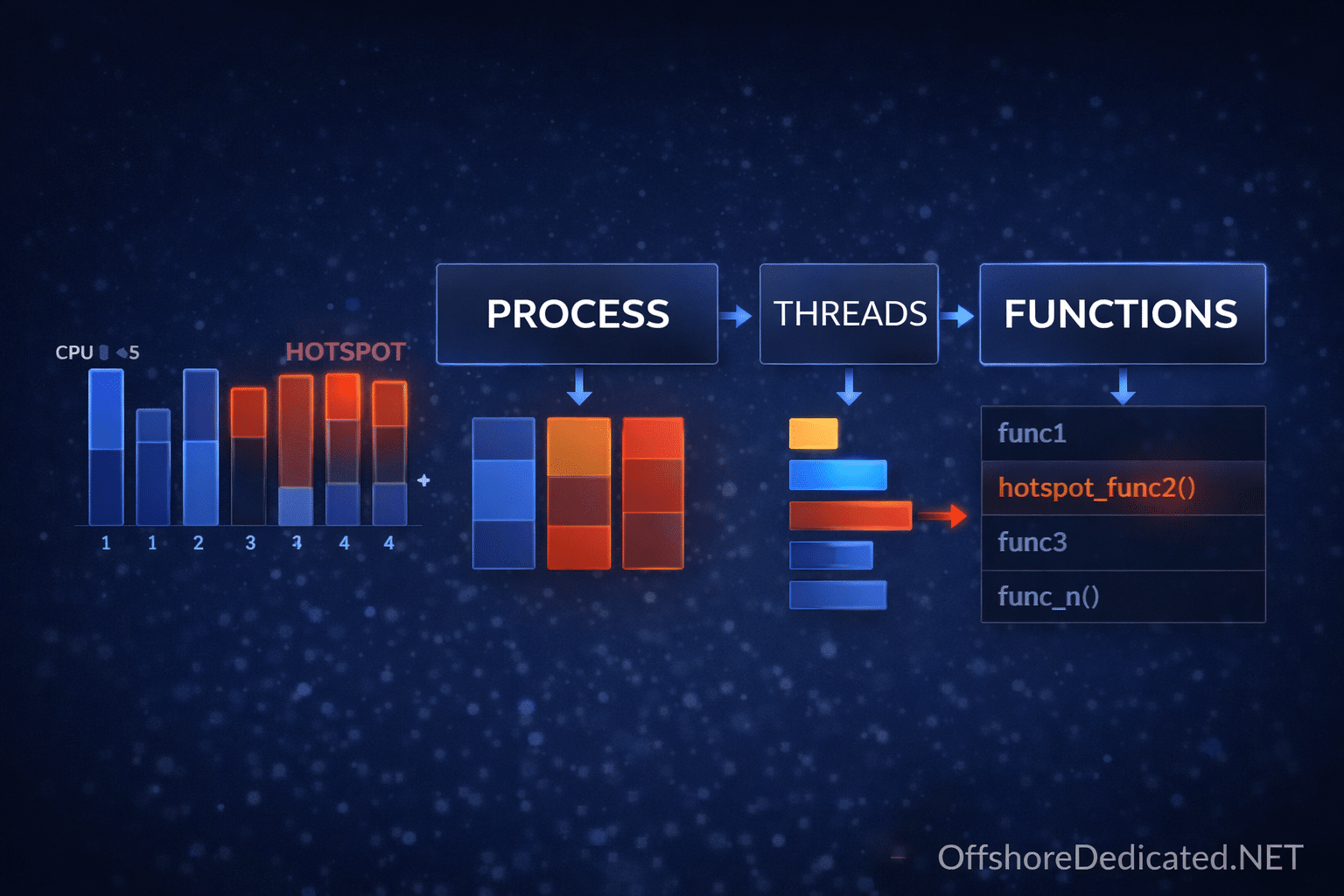
On a VPS, CPU time is allocated virtually and can be impacted by other tenants. On dedicated hardware, CPU scheduling is fully isolated.
Benefits:
- Stable performance under sustained load
- No “noisy neighbor” CPU spikes
- Consistent response times for compute-heavy workloads
Workloads that benefit:
- Large databases
- Video encoding
- Real-time analytics
- Game servers
B) Disk I/O Stability
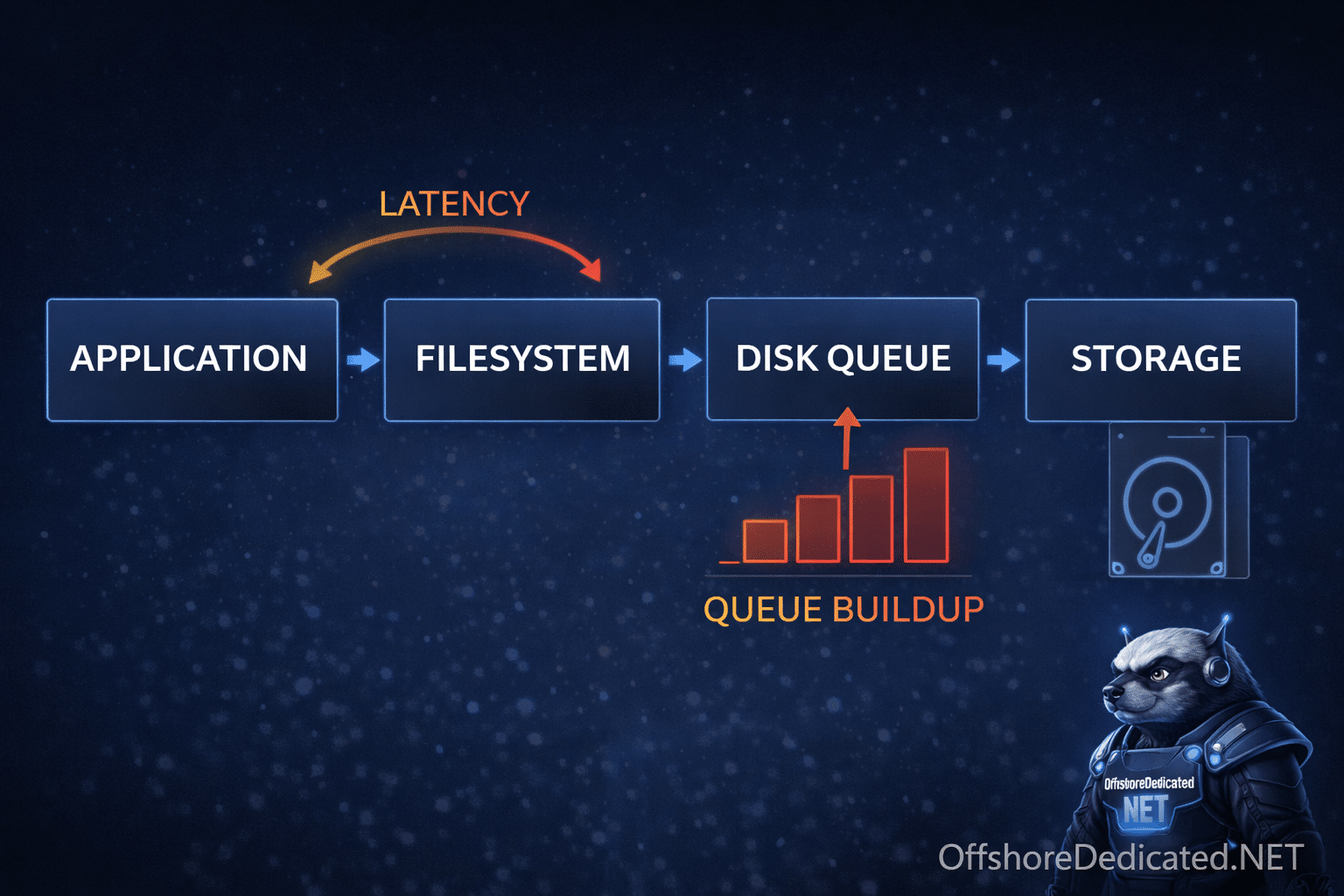
Disk I/O contention is one of the most common VPS bottlenecks.
Dedicated servers allow:
- Custom RAID configuration (RAID 1, 10, etc.)
- NVMe tuning
- Predictable queue depth behavior
High IOPS workloads (database-heavy platforms, streaming platforms) benefit significantly.
C) Network Throughput Control
Dedicated servers often provide:
- Guaranteed port speeds (1Gbps, 10Gbps, etc.)
- Custom firewall configurations
- Direct BGP announcements (in advanced setups)
This is especially relevant for:
- Streaming servers
- High-bandwidth applications
- Large file delivery systems
For bandwidth-intensive deployments, see our Offshore Dedicated Servers page.
D) Kernel and System-Level Customization
Dedicated infrastructure allows:
- Custom kernel modules
- Advanced firewall frameworks
- Specialized storage drivers
- Custom virtualization layers (if you want to run your own hypervisor)
This is not possible on most managed VPS environments.
E) Security Isolation
Because the hardware is not shared:
- There is no cross-tenant kernel attack surface
- No shared memory vulnerabilities between customers
- Reduced risk of hypervisor-level exploits
While OS-level security is still critical, the hardware isolation layer is stronger.
3. Real Disadvantages of Dedicated Servers
A) Cost Structure
Dedicated hardware requires:
- Physical hardware provisioning
- Rack space
- Power allocation
- Hardware maintenance
This makes entry cost significantly higher than VPS or cloud instances.
B) Scaling Friction
VPS and cloud systems scale vertically or horizontally in minutes.
Dedicated scaling requires:
- Hardware upgrade
- Server migration
- Possible downtime
Rapid growth environments may find this restrictive.
C) Underutilization Risk
If your workload does not consistently use the allocated CPU, RAM, or storage, you are paying for idle capacity.
Cloud and VPS models can be more efficient for burst workloads.
D) Hardware Lifecycle Responsibility
Even in managed hosting environments, hardware failures (drives, NICs, RAM) must be replaced physically.
This introduces:
- Replacement windows
- Potential performance degradation before failure detection
4. Dedicated vs VPS vs Cloud (Technical Comparison)
| Factor | Dedicated | VPS | Cloud |
|---|---|---|---|
| Hardware Isolation | Full | Shared Hypervisor | Virtualized Cluster |
| CPU Stability | High | Moderate | Variable |
| I/O Predictability | High | Moderate | Depends on Tier |
| Scaling Speed | Slow | Fast | Very Fast |
| Custom Kernel | Yes | Limited | Usually No |
| Cost Entry | High | Low | Variable |
| Ideal for | Stable heavy workloads | Growing mid workloads | Elastic workloads |
If you are currently evaluating VPS infrastructure, see our Offshore VPS Servers overview.
5. When Dedicated Is the Right Choice
Dedicated servers are well-suited for:
- High-traffic web platforms
- Large MySQL or MariaDB databases
- Streaming and media distribution
- Compliance-sensitive workloads
- Long-running compute tasks
- Custom virtualization stacks
When troubleshooting performance issues such as recurring 404 errors caused by overloaded infrastructure, understanding resource isolation becomes critical. See our 404 deep dive guide for layered diagnosis.
6. When Dedicated Is NOT the Right Choice
Avoid dedicated servers when:
- Traffic is highly unpredictable
- Budget flexibility is limited
- Rapid scaling is required
- You lack in-house system administration capability
In such cases, VPS or hybrid cloud models may be more efficient.
7. Migration Considerations (VPS to Dedicated)
Migration planning should include:
- Disk partition replication
- Database consistency verification
- DNS propagation timing
- Backup validation
- Control panel rebuild or migration
For administrators managing control panel stacks, review:
Control Panel Architecture & Operational Tradeoffs.
8. Cost Modeling & ROI Perspective
Dedicated infrastructure makes financial sense when:
- Resource usage is consistently high
- Downtime risk carries financial impact
- Performance predictability is business-critical
For smaller workloads, VPS may provide better cost-to-performance ratio.
Final Thoughts
Dedicated servers are not simply “more powerful hosting.” They represent a shift from virtualized resource sharing to full hardware ownership.
That shift brings:
- Performance stability
- Hardware-level isolation
- Greater customization freedom
- Higher financial and operational responsibility
The correct choice depends not on marketing claims, but on workload behavior, growth expectations, and operational maturity.